Bedroom Feng Shui: The Sleep Mistakes Costing You Rest
|
Bedroom Feng Shui in 30 Seconds Keep your bedroom Yin. Skip plants, screens, water fountains, and heavy bookshelves near the bed. The bed matters most. A solid headboard, two nightstands, and a position that avoids lining up with the door all support real rest. Orientation is personal. The best headboard direction depends on your birth chart and your home's Flying Stars, not a generic rule. Two small habits help daily. Open the window each morning, and keep the door closed at night. Couples need balance. Both sides of the bed should offer equal space, light, and access. |
If you wake up tired even after eight hours of sleep, your bedroom's energy might be working against you.
We spend roughly a third of our lives asleep, yet we rarely stop to ask whether our bedroom actually supports that recovery.
In Traditional Feng Shui, the position of your bed, its orientation, and even small details like plants, books, or a water fountain can shape how well you rest.
Do you know the most common mistakes in bedroom Feng Shui? Let's find them, and fix them together.
Why Your Bedroom Needs to Stay Yin
Every room in a home has its own energetic function. In Traditional Feng Shui, the bedroom is the most Yin room in the house: the space reserved for rest, physical recovery, and the renewal of energy overnight.
It's also the room where that function gets compromised the easiest. A few everyday habits quietly introduce Yang energy that doesn't belong there.
Here are the six most common offenders:
- Plants. Great in the living room, not so great by your pillow. Plant Qi is active, and mixing it with your resting Qi disrupts sleep.
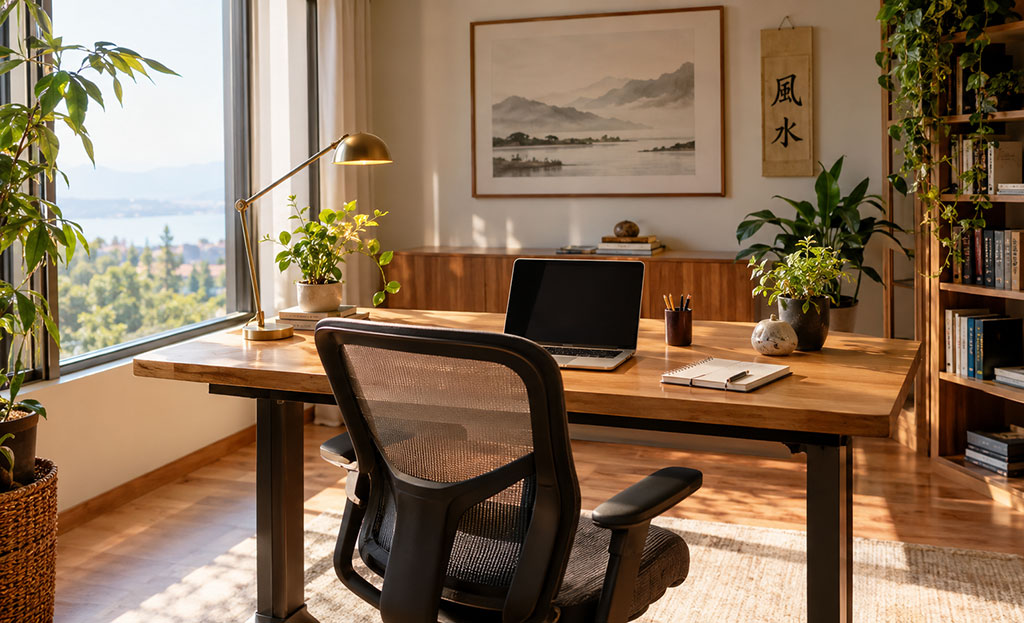
- Work materials. A desk in the bedroom mixes Yang focus with Yin rest. If you can't remove it, clear it and cover it before bed.
- Electronic devices and screens. Phones, laptops, and TVs bring light, stimulation, and movement into a space meant for stillness. Keep them out, or cover the TV at night.
- A large bookshelf. A few bedside books are fine. A wall of them keeps the mind too active for rest.
- Water fountains. Running water activates Qi through constant movement, which works against your bedroom's Yin purpose.
- Bold or bright colors. There's no single “Feng Shui color” for every bedroom. Soft, matte, low intensity tones tend to support calm, but the right shade depends on your home's sector, its Flying Stars chart, and who sleeps there.
Location, Quiet, and Your Daily Door and Window Ritual
Where your bedroom sits within the home matters. Depending on the sector, it can support restorative energy or work against it.
Noise matters too. Whenever possible, place bedrooms in the quietest part of the home, away from constant activity, so the room can hold a Yin atmosphere.
There's also a small ritual worth building into your day:
- Morning: open the window fully. Overnight Qi settles in the room, and fresh air renews it, much like smoke needs an open window to clear.
- Night: keep the door closed. This stops Qi from
circulating freely between the bedroom and the rest of the home, protecting the
Yin atmosphere you need to rest.
At night we protect and stabilize. In the morning we open up and renew. This daily rhythm mirrors the relationship between Yin and Yang itself.
The Bed: The Heart of Bedroom Feng Shui
If one element earns the most Feng Shui attention in a bedroom, it's the bed itself: its structure, its surroundings, and its exact position in the room.
A Solid Headboard, With Nothing Hanging Above It
The headboard does more than decorate. It defines the bed's orientation and symbolizes the Black Tortoise (Xuan Wu 玄武), one of the four celestial animals in Feng Shui, tied to stability, support, and protection.
A solid headboard set against a stable wall reinforces that sense of security.
Avoid placing shelves, cabinets, or exposed structural beams above the headboard, especially over the head, torso, or leg area. Heavy objects overhead create visual and energetic pressure that works against rest.
The goal during sleep: support behind you, space above you, and stability all around.
Two Nightstands, Not Just One
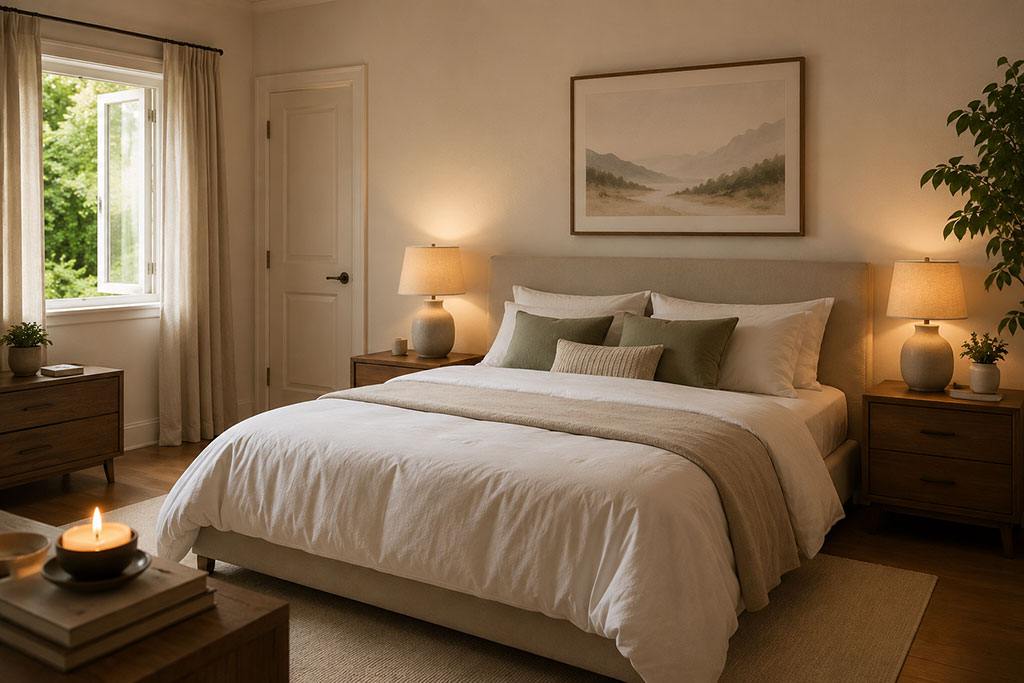
Nightstands on either side of the bed symbolize the Green Dragon (青龍, left side, associated with the man) and the White Tiger (白虎, right side, associated with the woman). Together, they help contain and stabilize the Qi around your resting area.
When one side sits flush against the wall with no nightstand, that celestial animal's energy weakens symbolically.
The Commanding Position
You should be able to see the door from bed, since that view brings a sense of security and control. But avoid lining the bed up directly with the door; the Qi flowing through it can disturb the stability of your rest.
Sleeping with your feet pointing straight at the door is one of the least favorable setups. In some Western cultures, it's even nicknamed the “coffin position.”
The Mattress and the Space Under the Bed
Skip old or sagging mattresses, and favor natural materials. Spring mattresses, with their many metal components, are traditionally considered less favorable for Qi during sleep.
Keep the space under the bed clear. It's symbolically tied to the past, so storing boxes, suitcases, or clothing there can represent difficulty letting go of old cycles. An open space favors circulation and renewal.
Headboard Orientation: More Than Just Any Direction
Bed orientation ranks among the most important factors for restorative sleep. Finding the best headboard direction means analyzing the eight compass directions and the Flying Stars in your home's energy chart.
Each direction carries its own characteristics, and the right one supports a more harmonious room.
But Traditional Feng Shui doesn't stop at the house, it looks at the person too.
- Ba Zhai (Eight Mansions) uses your year of birth to find your most favorable orientations.
- Xuan Kong Fei Xing (Flying Stars) evaluates the energetic quality of your home's directions and sectors.
Combined, these methods point to solutions built for you specifically. There's no universal answer here; everyone's energetic needs differ.
Position in the Room Matters Too
Qi doesn't spread evenly through a space. Some zones accumulate energy and stay stable. Others see more circulation, and some hold weaker energy overall.
Two beds in the same room, or the same bed moved to a different spot, can experience very different Qi quality, even with identical headboard orientation.
Feng Shui for Couples: A Bedroom Designed for Two
When you share a bedroom, Traditional Feng Shui adds another layer of meaning: how you arrange the space sends a message about the relationship itself.
- The bed structure. A double bed with a continuous base represents stability and sharing. Two single beds pushed together keep a symbolic sense of separation, even side by side.
- The balance between sides. Both sides deserve equal room to move, a nightstand, lighting, and easy access. Favoring one side, or using the other only for storage, creates a symbolic imbalance in the relationship.
- The images in the room. Choose photos and artwork that convey serenity, and avoid images of conflict, sadness, or solitude. Couples benefit from a happy shared photograph. If you're single and hoping for a relationship, skip images where you appear alone, and favor symbols of togetherness instead.
5 Common Bedroom Feng Shui Mistakes
Here are the five mistakes that most often compromise a bedroom's energy:
1. Using the bedroom as an office, or facing a TV toward the bed. This mixes Yang activity energy with Yin rest energy.
2. Sleeping with your feet toward the door, or aligning the bed with it. This exposes your resting area to the Qi entering the doorway.
3. Leaving one side of the bed against the wall or reserved for storage. This weakens the Green Dragon or White Tiger and unbalances a couple's bedroom.
4. Storing items under the bed, or hanging shelves above the headboard. This blocks Qi circulation and adds pressure exactly where you need protection.
5. Ignoring the mattress, the room's quietness, or the bed's position. These factors matter just as much as orientation, and they're the ones most often forgotten.
Where to Start: Your 5 Point Bedroom Checklist
You can't always change your bedroom's location or your home's structure, but you can always start somewhere. Before making changes, look at these five areas:
1. The function of the space. Does your bedroom serve sleep only, or does it double as an office, media room, or library?
2. The structure of the bed. Does it have a solid headboard, nothing hanging above it, nightstands on both sides, and a mattress in good shape?
3. The relationship with the door. Can you see the door without the bed lining up with it? Do you close the door at night?
4. The orientation and position in the room. Does the headboard match your personal energy chart? Does the bed sit where Qi accumulates?
5. Balance for couples. Do both sides of the bed offer similar space, light, and access?
These five points don't replace a full reading of your home and personal energy chart, but they give you a solid place to start.
The Bottom Line: Good Sleep Starts With Good Feng Shui
Few people ever study the Feng Shui of their own bedroom, even though it's likely the most important room in the house. It's where you recover from the day, renew your energy, and prepare for the next one.
Feng Shui isn't just a design trend; it's a home design philosophy rooted in centuries of observation about how space affects wellbeing. Caring for your bedroom's Feng Shui means caring for your health, your relationships, and your prosperity.
That's why Traditional Feng Shui never starts with colors, cushions, or decor. It starts with where your bedroom sits in the home, how Qi moves through the room, the best bed location and orientation, and the support and protection around it. Colors, furniture, and lighting come after.
No bedroom checks every box right away, and that's not the goal. Traditional Feng Shui asks for a space that respects its Yin nature: simple, stable, and shielded from the stimuli that belong to other hours of the day.
So, is your bedroom working in your favor? If you don't yet know your home's energy chart, now's a good time to find out.
✨ Get in touch and schedule your Traditional Feng Shui consultation.
Frequently Asked Questions About Bedroom Feng Shui
Can I keep plants in my bedroom?
It's best to avoid them. Plant Qi is active and can interfere with the calm, Yin energy your bedroom needs for rest.
What's the best direction to face my bed?
It depends on you. Traditional methods like Ba Zhai use your birth year, while Flying Stars analyzes your home's chart. There's no single direction that works for everyone.
Is it bad to sleep with my feet facing the door?
Yes. Traditional Feng Shui considers this one of the least favorable bed positions, sometimes called the coffin position in Western culture.
Do I really need two nightstands?
Ideally, yes. They symbolize the Green Dragon and White Tiger, and having one on each side helps stabilize Qi around your resting area.
Can I store things under my bed?
It's better not to. The space under the bed is symbolically linked to the past, and clutter there can represent difficulty letting go.
How do I start improving my bedroom's Feng Shui?
Start with the five point checklist above: the room's function, the bed's structure, its relationship with the door, orientation, and balance for couples.